

Estimated reading time: 18 minutes
If most of your portfolio is in the US market, are you actually diversified?
For years, the strategy was simple, just buy the US S&P 500 and hold it. And to be fair, it works when the US is still home to the world’s largest companies.
But today, there is a structural issue many investors overlook. The top 10 companies alone already make up nearly 40% of the entire index.
This means your “diversified” portfolio may actually be heavily concentrated in a small group of tech giants.
And with geopolitical risks rising, that kind of concentration can backfire quickly. The IMF has already warned that shocks in one region can easily spill across global markets.
You don’t need to leave the US, but you shouldn’t rely on it entirely.
TABLE OF CONTENTS
- Why Diversification Matters More Than Ever
- The US Market: The Core, But Not Everything
- Diversification Beyond Geography
- Why Asia Is Becoming More Relevant
- Asia’s Role in the Global Value Chain
- Understanding China Exposure
- Hong Kong: The Gateway Market
- China’s Domestic Market: A Different Driver
- Singapore: Stability Over Growth
- How to Build a Diversified Portfolio
- Final Thoughts
Why Diversification Matters More Than Ever
When your portfolio is heavily tied to one market, everything moves together.
We saw this clearly in 2022, when the MAAG7 stocks dropped more than 20% after the Fed started tightening. Many investors reacted emotionally and sold at the worst time.
Yet those same companies are now trading above their previous highs.
This highlights a key idea: Diversification is not about avoiding volatility. It’s about controlling how your portfolio reacts to it.
You cannot control market direction, but you can control your exposure.
The US Market: The Core, But Not Everything
The US market still plays a critical role in most portfolios.
It is home to companies like Apple, Microsoft, and Nvidia, businesses that influence not just the US, but global markets as a whole.
For most investors, ETFs provide the simplest way to gain exposure. They allow you to participate in broad market performance without relying on individual stock selection.
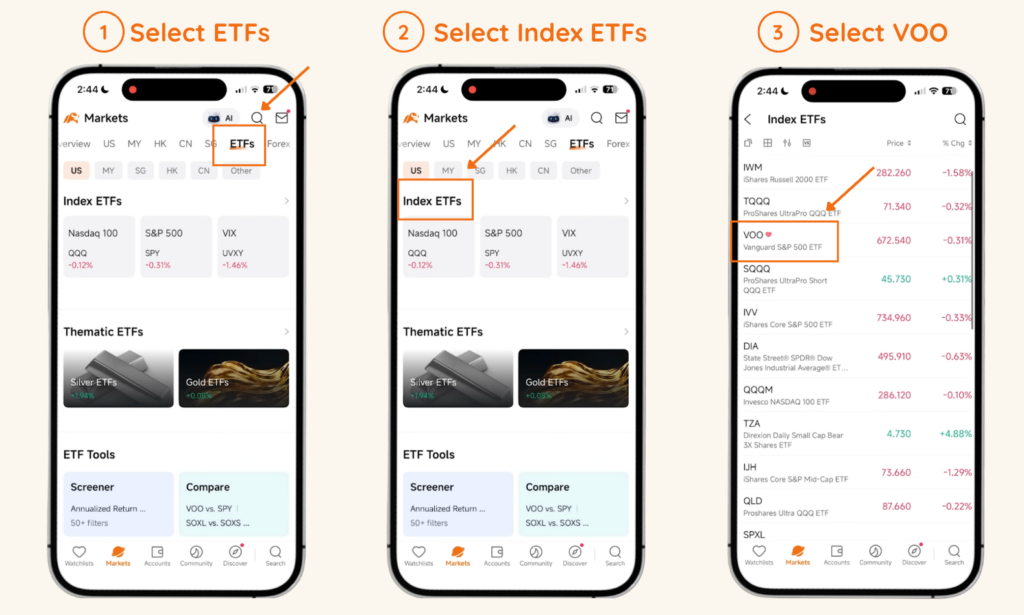
Instead of guessing what to buy, you can utilize platforms like Moomoo to help you in investing. Go into the ETF section, you can start by exploring broad index ETFs like S&P 500 or Nasdaq-based funds. With Moomoo, you can also invest worldwide, such as Bursa Malaysia, Singapore market and the US market.
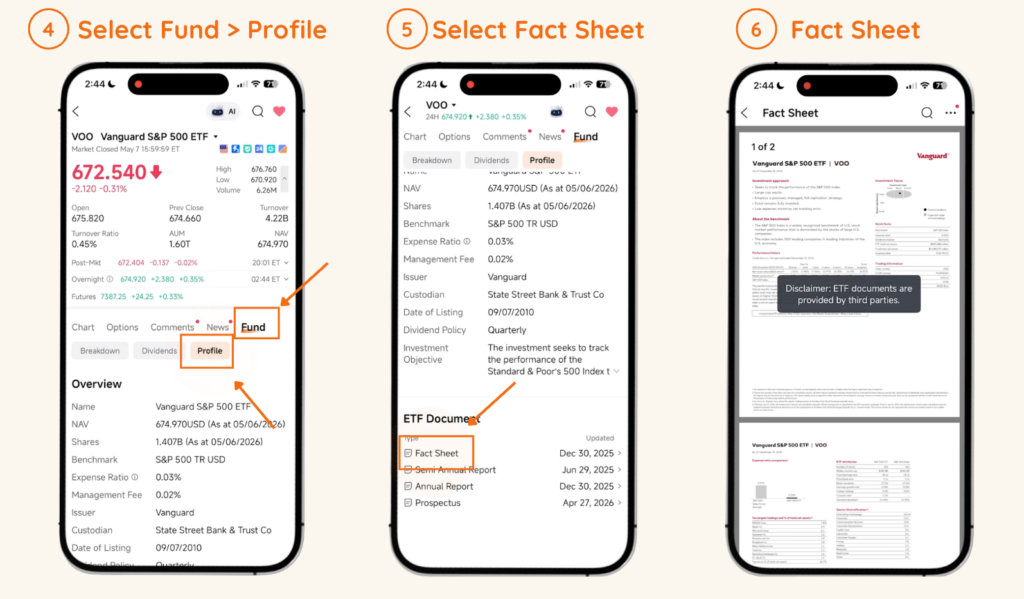
A practical approach is to review the ETF’s profile and supporting documents, such as the fund fact sheet. These provide key insights into:
- the underlying holdings
- the level of concentration
- sector exposure
- and how the ETF fits within a broader portfolio
Understanding what an ETF actually holds is critical because even diversified products can still be heavily concentrated in certain sectors or companies.
Here’s how you can explore ETFs yourself on Moomoo app:
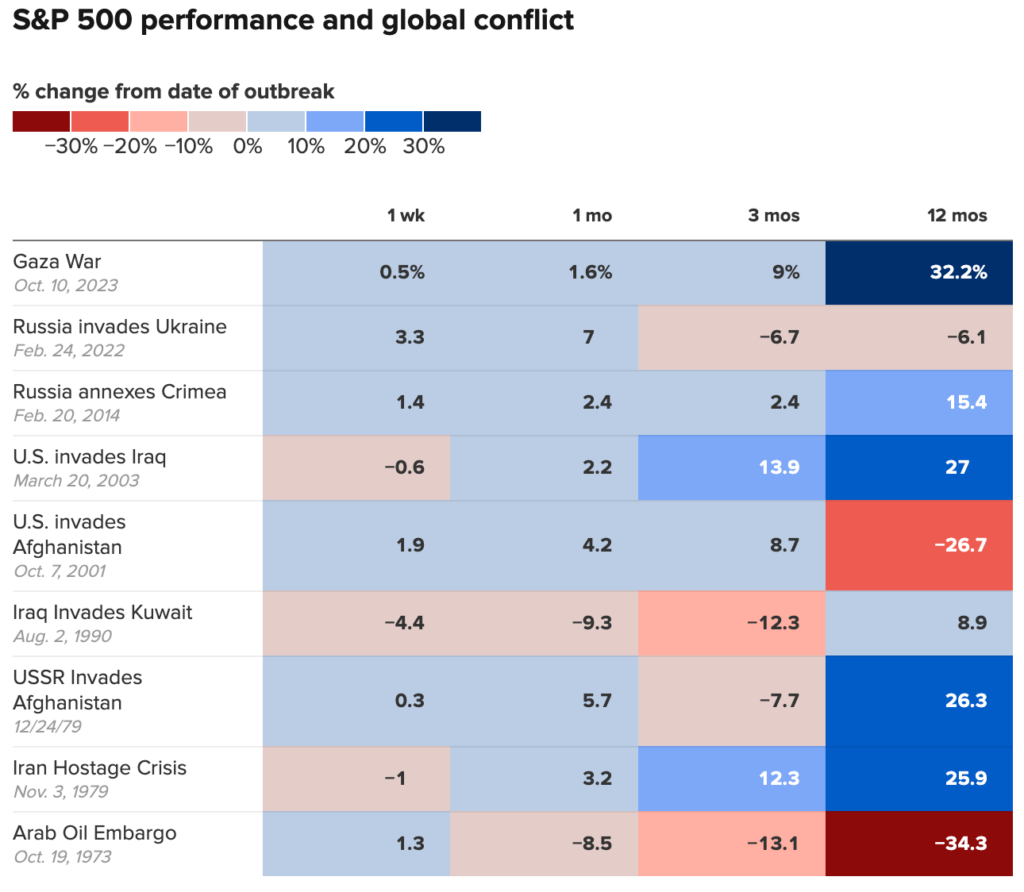
Historically, this approach has worked. The S&P 500 has delivered an average annual return of almost 11% for the last 7 decades, even through crises, and in many cases, it ended up higher after one year.
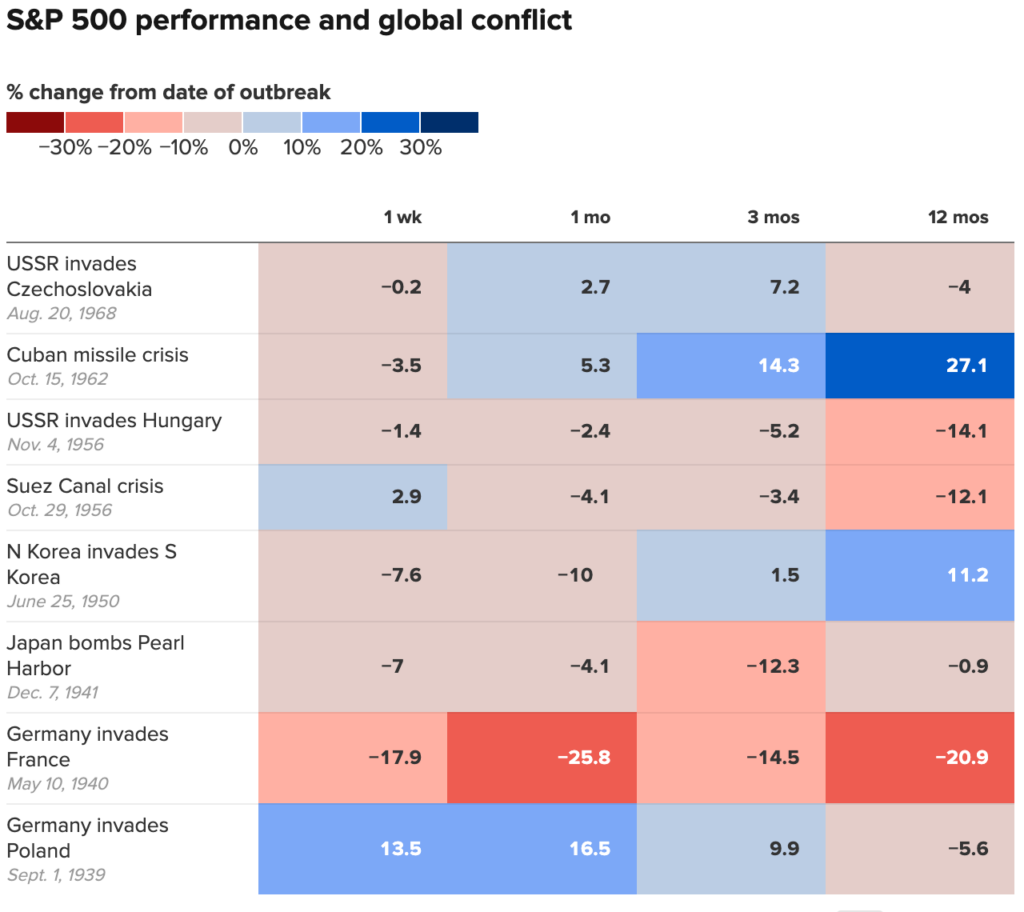
But there is a shift happening.
The US market is strong. But it is also increasingly concentrated.
That’s why the US should remain your foundation, not your entire portfolio.
Diversification Beyond Geography
Most investors think diversification means investing in different countries.
But that’s only half the story.
A properly diversified portfolio also considers what actually drives returns.
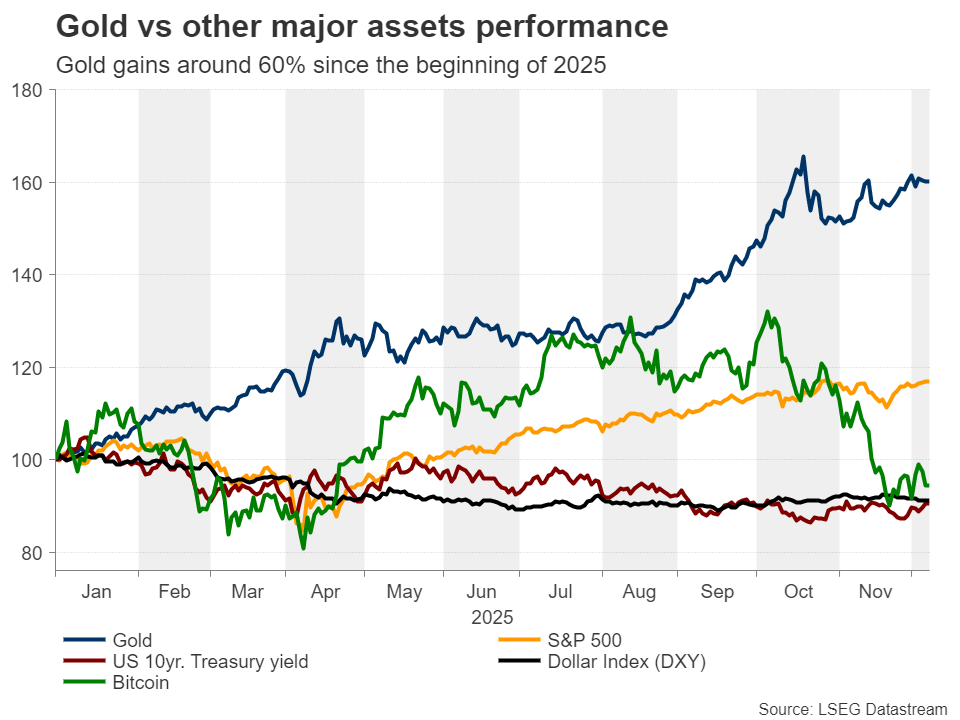
Different asset classes behave differently under different condition:
- Equities → growth
- Bonds → stability
- Commodities → inflation hedge
The idea here is simple. You don’t just want different countries, you want different sources of return.
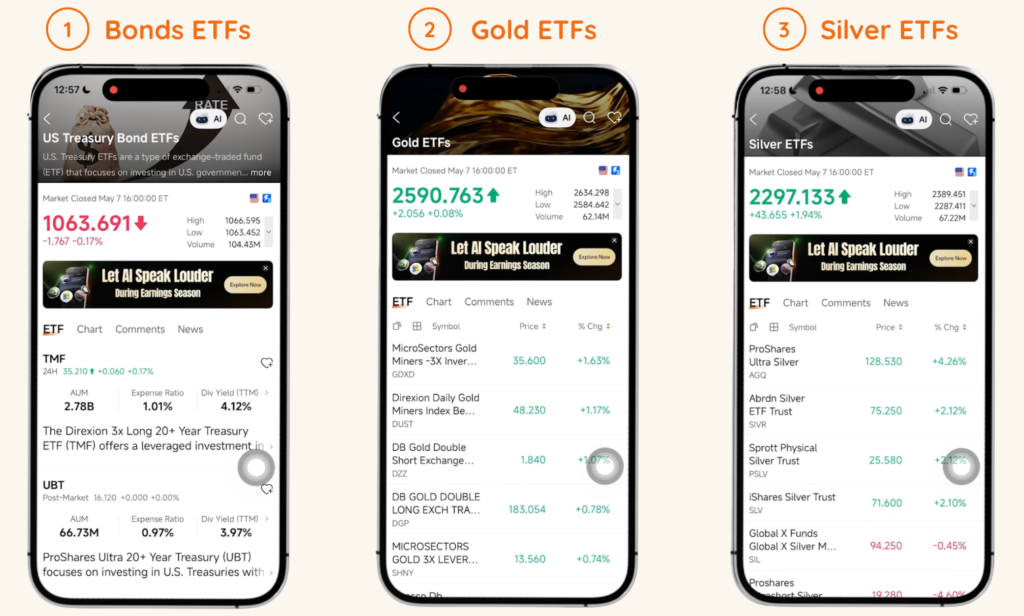
There are other asset classes ETFs available to trade on Moomoo as below:
Why Asia Is Becoming More Relevant
With geopolitical risks rising, many investors are starting to look beyond the US.
Across the world, businesses are actively repositioning themselves into regions that are more stable, more predictable, and less dependent on a single supply chain.
And a very big part of this shift is driven by the semiconductor industry.
With the rise of AI, demand for chips has surged. At the same time, companies are restructuring supply chains to reduce dependency on a single region.
That’s why more supply chains are moving into Asia.
You can see this through capital flows. More FDI is moving into Asia, especially like Singapore, Indonesia, Vietnam, and Malaysia.
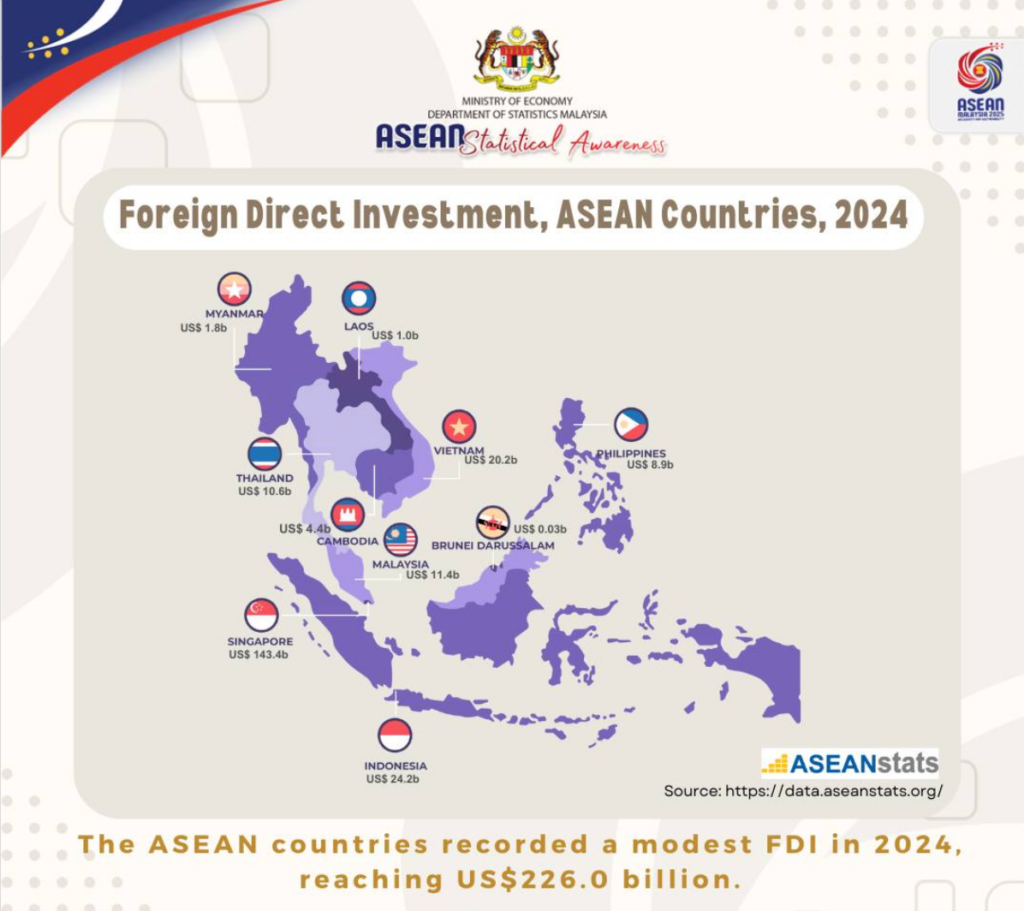
This is being driven by:
- data centre expansion
- manufacturing growth
- supply chain diversification
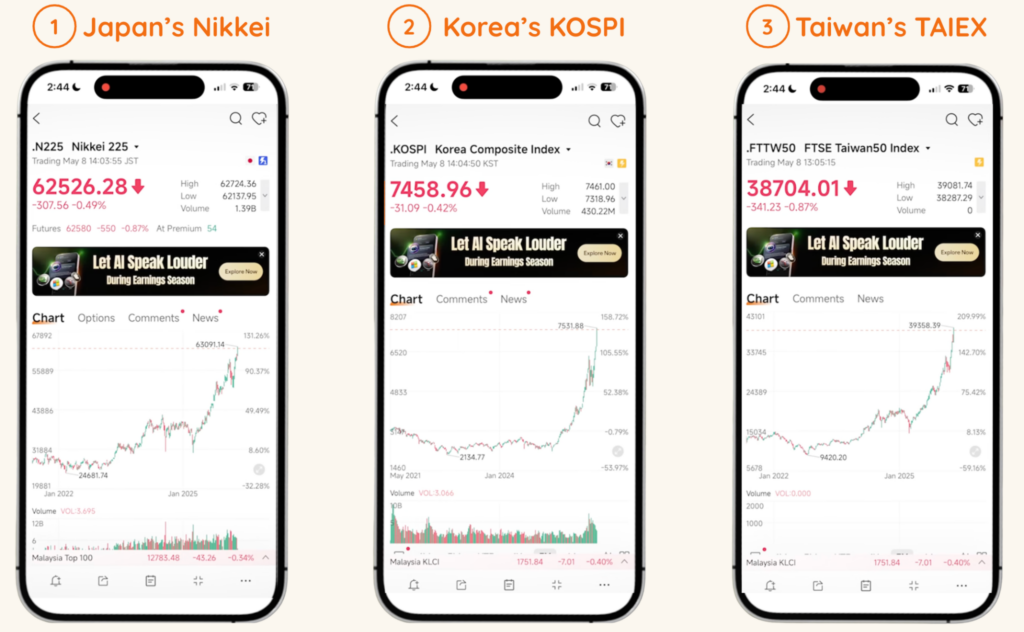
If you look at the broader market performance, indices like Japan’s Nikkei, Korea’s KOSPI, and Taiwan’s TAIEX, they have all shown strong momentum in recent years.
Asia’s Role in the Global Value Chain
But here’s what most investors miss. Asia is not just a region, it is a system.
Modern technology is not built in one place. It is assembled across multiple countries, each specialising in a specific part of the process.
At the higher end:
- Taiwan → advanced chip manufacturing
- Korea → memory and AI components
- Japan → materials and precision technologies
Further down:
- Southeast Asia → assembly, testing, packaging
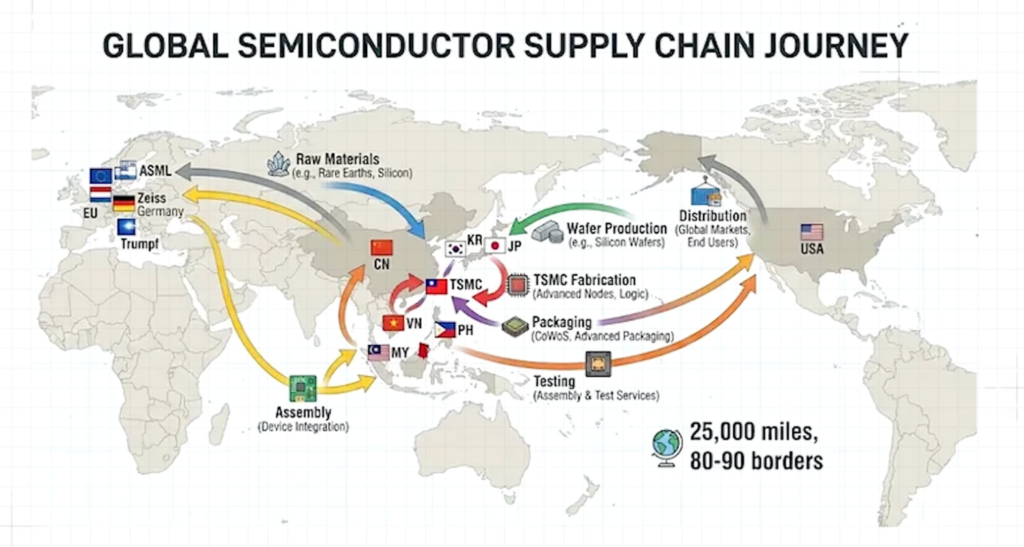
This layered structure is not accidental. It reflects decades of specialisation.
And because of this: No single country controls the system, but every part of the system is essential.
When you invest in Asia, you are not just diversifying geographically, you are adding a completely different component that could hedge your downside risks, or even drive your portfolio further.
Understanding China Exposure
Before we go further into China, we should understand the Classification of China shares.
In reality, there are multiple ways to gain exposure, and they behave very differently.
| Category | A-Shares (Mainland China) | H-Shares (Hong Kong) |
| Market listed | Mainland China (Shanghai/ Shenzhen Stock Exchange) | Hong Kong Stock Exchange |
| Currency | Renminbi (RMB) | Hong Kong Dollar (HKD) |
| Who can invest | Mainly domestic investors | Open to global investors |
| Market driver | Domestic economy, policy, local demand | Global sentiment, international capital flows |
| Behavior | Moves based on China’s internal conditions | Moves with global markets |
| Examples | CATL, Kweichow Moutai, Midea. | Xiaomi, Pop Mart, BYD |
In simple terms, A-shares are China from the inside while H-shares are China through a global lens.
Hong Kong: The Gateway Market
For investors looking to gain exposure to China, one market consistently stands out: Hong Kong.
Hong Kong sits at the intersection of China’s economy and global capital.
This positioning allows it to function as a bridge between local Chinese companies and international investors.
It’s the largest offshore RMB hub in the world, with around RMB 1 trillion held outside mainland China. A significant portion of global RMB transactions flows through Hong Kong.
Many Chinese companies choose to list there because it gives them access to international investors, while still maintaining exposure to their core domestic business.
For investors, this creates a very practical advantage.
Instead of navigating the restrictions and complexity of mainland markets, you can gain exposure to China through a system that is already familiar.
At the same time, Hong Kong is one of the most liquid markets in Asia.
Because global institutions actively trade here, it is generally easier to enter or exit positions, as well as execute trades efficiently.
Liquidity reduces friction and friction is one of the biggest hidden costs in investing.
There is also the question of transparency.
Compared to mainland exchanges, Hong Kong operates under a more internationally aligned regulatory framework. This makes it easier to:
- access information
- understand disclosures
- navigate the market
For most people, this is usually where they start when looking at China.
It becomes the most practical way to gain China exposure without dealing with unnecessary complexity.
China’s Domestic Market: A Different Driver
Yes, investing in China through Hong Kong is more efficient, but this is different from investing directly in China’s domestic market when both markets are driven by different structures and forces.
The first major difference lies in how each market is structured.
When investing through Hong Kong, exposure tends to be concentrated in:
- large internet platforms
- financial institutions such as banks
- property
- energy-related sectors
In contrast, the mainland A-share market offers broader exposure across:
- domestic consumption
- manufacturing
- industrial supply chains
- emerging sectors within China’s economy
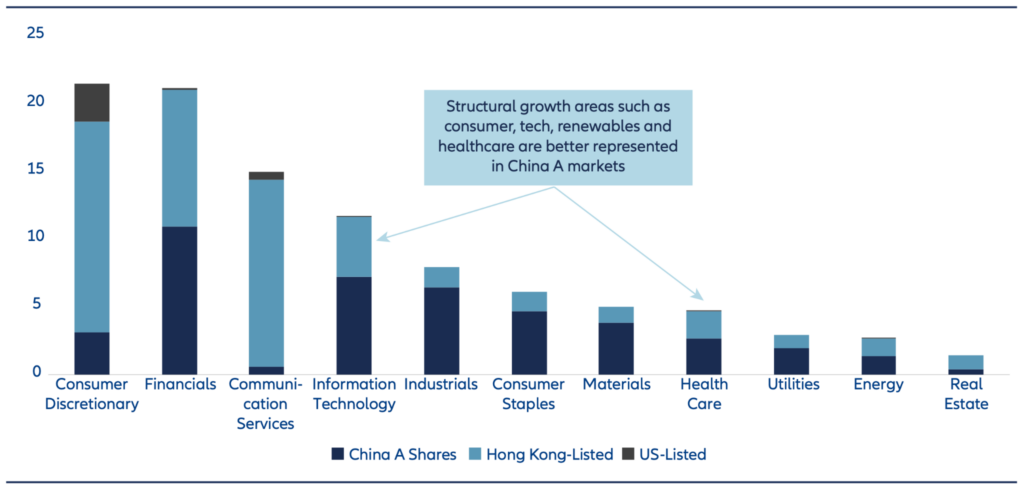
This difference starts at the composition level.
In the Hong Kong market, you are looking at Chinese companies that are more exposed to global capital. These are usually larger, more established firms, and their prices move with global sentiment.
However, the behavior is different in the domestic A-share market. It reflects directly what’s happening inside China. For example, domestic demand, policy changes, and local economic cycles tend to play a bigger role here.
Thus, the market doesn’t always move in sync with global markets. There are periods where global markets are weak, but China’s domestic market is moving on its own cycle.
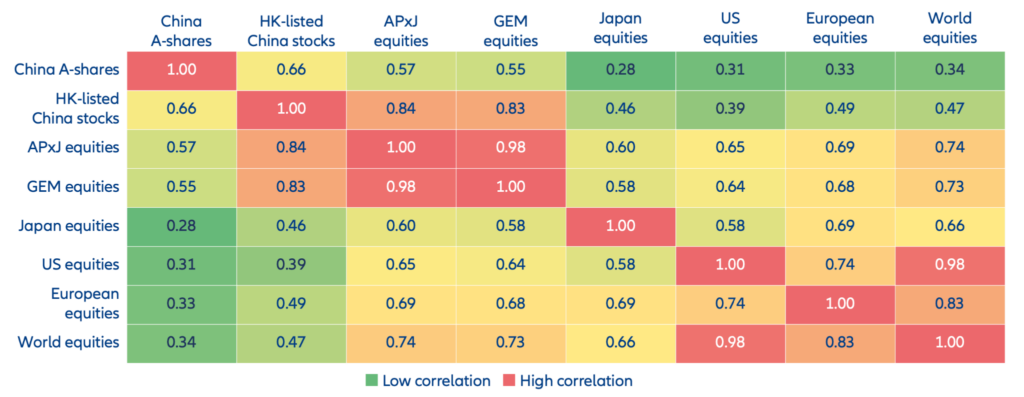
From a portfolio perspective, the question is not just whether you invest in China, but how.
Different markets within China are driven by different forces, offering a set of return drivers that are not present in the US or other developed markets.
While A-shares offer direct access to China’s domestic economy, they are not always the easiest market for international investors to access.
This is where Hong Kong becomes particularly useful.
Instead of entering mainland markets directly, many investors choose to gain exposure through Hong Kong-listed ETFs.
This approach provides:
- simpler access
- familiar regulatory structures
- greater liquidity
You can think of Hong Kong as your entry point. It allows you to get exposure in a more structured way, without adding too much complexity at the start. For most investors, especially beginners, this approach tends to be easier to manage.
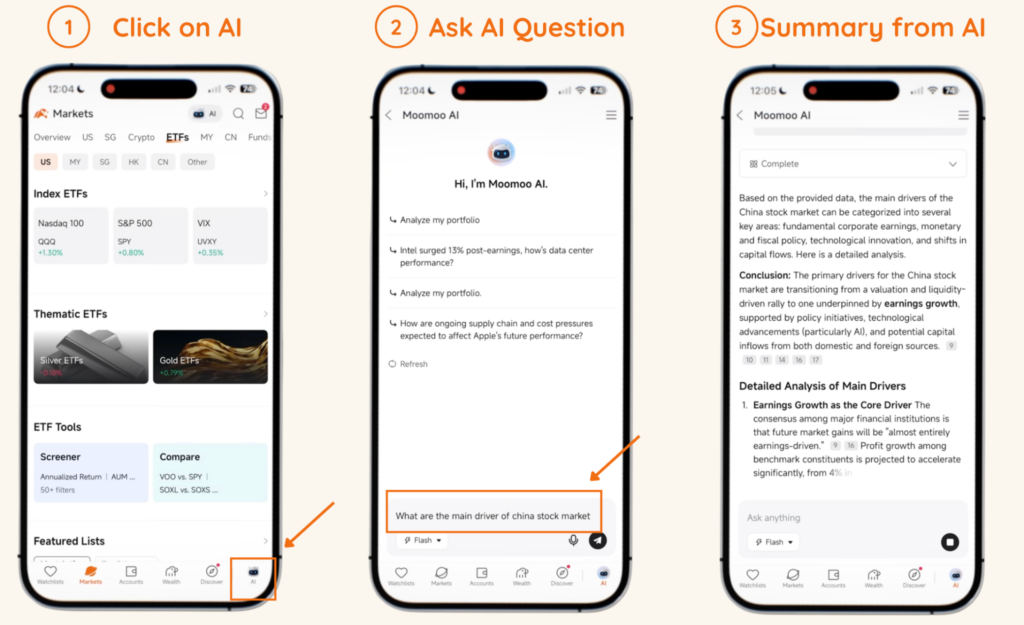
If you are still evaluating the China market, structured research tools like Moomoo AI can help you narrow down your approach.
For example, instead of analysing everything manually, you can focus on key questions such as:
- What are the main drivers of the China stock market today?
- Which ETFs provide exposure to A-shares?
This allows you to understand the market more efficiently and make more informed decisions.
Steps to use Moomoo AI:
Singapore: Stability Over Growth
Not every market in a portfolio needs to deliver high growth.
Some markets play a different role and Singapore is a good example of that.
Compared to markets like the US or China, Singapore is not designed to be a high-growth engine. Instead, it offers something equally important: stability and income consistency.
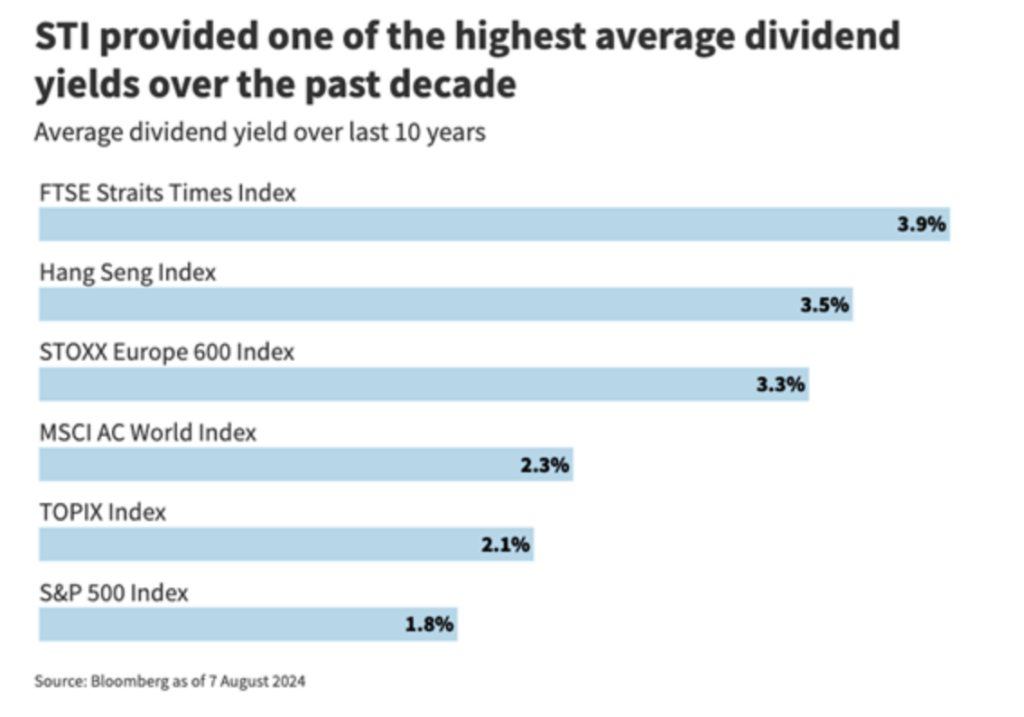
If you look at the Singapore market more closely, this becomes clear.
The Straits Times Index (STI), which tracks the top 30 companies listed on the Singapore Exchange. A lot of these are established businesses:
- Banks
- Real estate
- Infrastructure-related companies
These are not companies that are trying to become the next Nvidia or Tesla. But they generate steady cash flow and tend to distribute a significant portion of it back to investors through dividends.
Singapore has also positioned itself as a regional financial hub, connecting capital flows across Asia, especially into Southeast Asia’s growing economies and tech ecosystems.
When you invest in Singapore, you are not just investing in a local economy. You are also gaining exposure to its role as a connector within the region.
From a portfolio perspective, Singapore serves a balancing function.
Growth-focused markets tend to be more volatile. While they can generate higher returns, they also come with larger swings.
Singapore helps offset this by providing:
- more stable performance
- consistent dividend income
- lower volatility compared to growth-heavy markets
Returns matter, but so does the ability to stay invested.
A portfolio that fluctuates too much can be difficult to hold, especially for newer investors. This is often what leads to emotional decisions at the wrong time.
Singapore addresses this problem.
It may not deliver explosive growth, but it improves portfolio stability, making it easier to stay invested over the long term.
And in investing, that consistency often matters more than chasing the highest returns.
How to Build a Diversified Portfolio
When it comes to ETFs, many investors tend to overcomplicate the process.
The problem is not a lack of understanding, it’s execution. Once you start exploring different markets, sectors, and assets classes, it can quickly become overwhelming.
A more practical approach is to simplify the process by starting with a structured framework.
And this is where Moomoo fits naturally into the process. Instead of randomly picking ETFs, begin by looking at broad ETF pages.
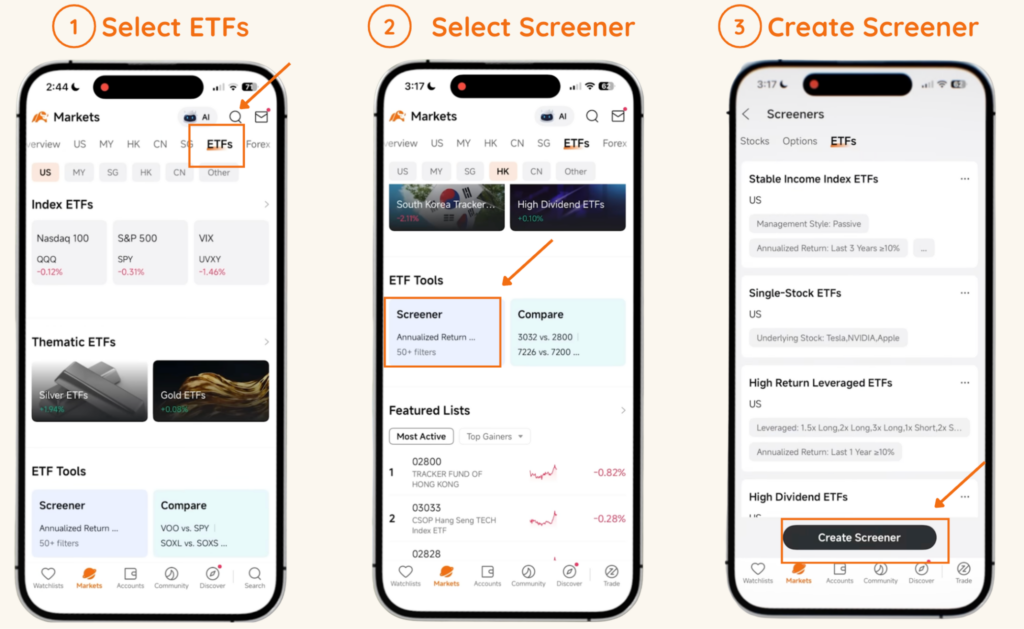
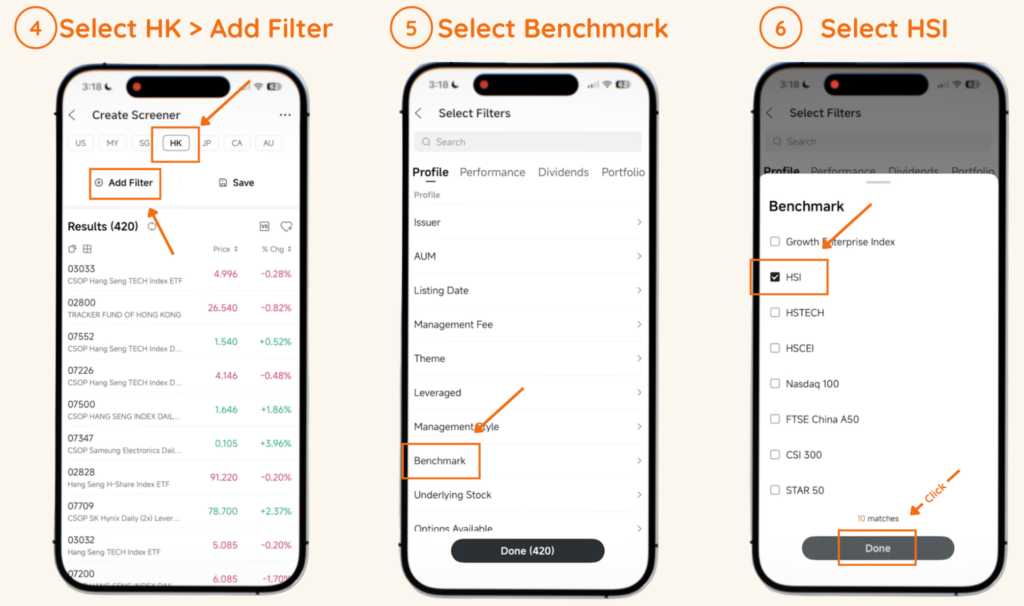
But if you want to go deeper, the next step is to narrow your choices. Rather than manually going through dozens of ETFs, use the ETF filter tool to align selection with your financial goals and risk tolerance. There are more than 50 filters available to fine-tune your search. Whether it’s a specific sector, performance level, or risk tolerance, you can select what best suits your needs.
For example, if you are looking for Hong Kong stable income index ETFs, you can filter them using screener as below:
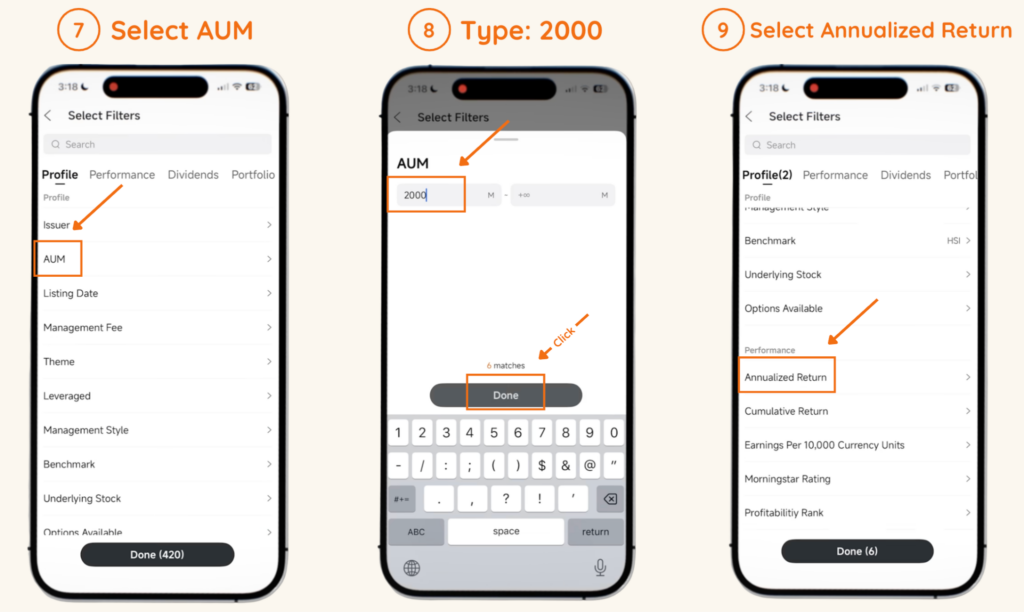
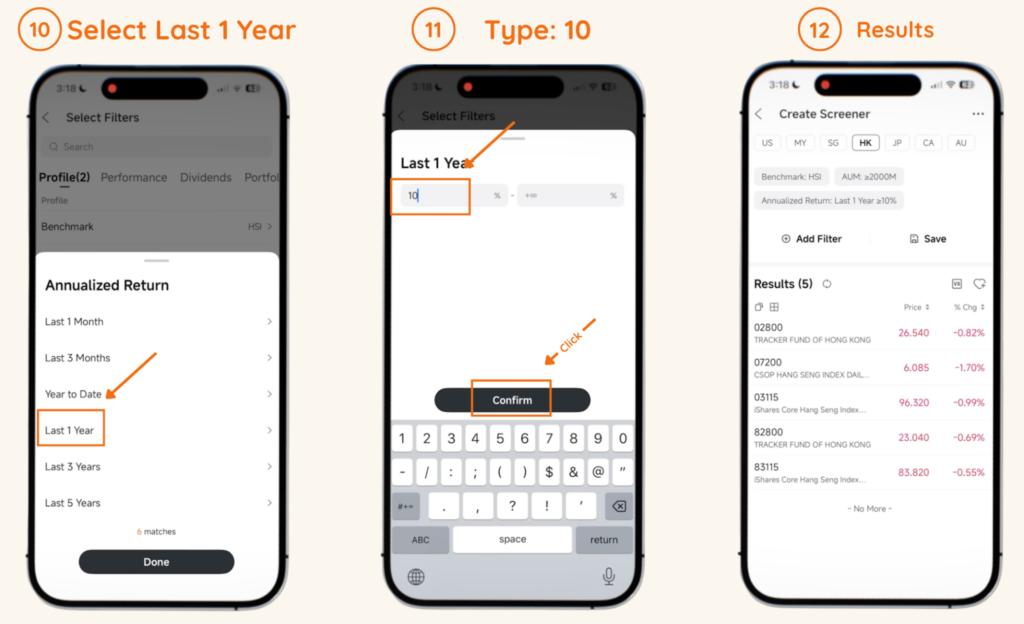
When you are narrowing down your shortlist, comparison becomes critical.
Instead of evaluating ETFs in isolation, Moomoo allows you to compare up to 6 symbols ETFs’ side by side based on:
- historical performance
- expense ratio
- top 10 holdings
- Risk exposure
Here’s how you can compare the ETFs from your screener:
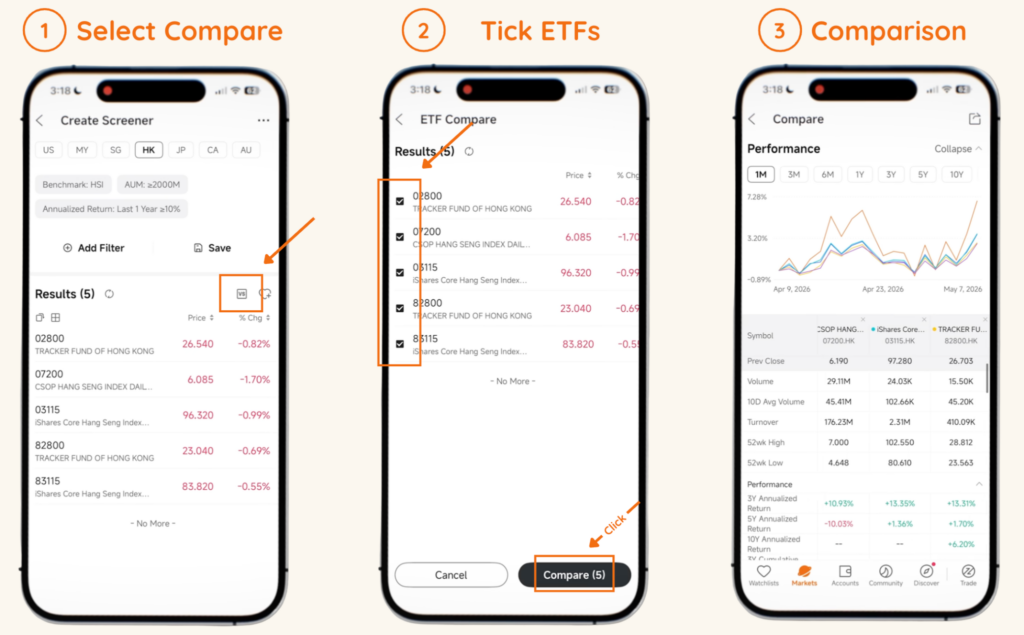
Two ETFs may track similar markets, but their underlying composition and cost structure can lead to very different outcomes.
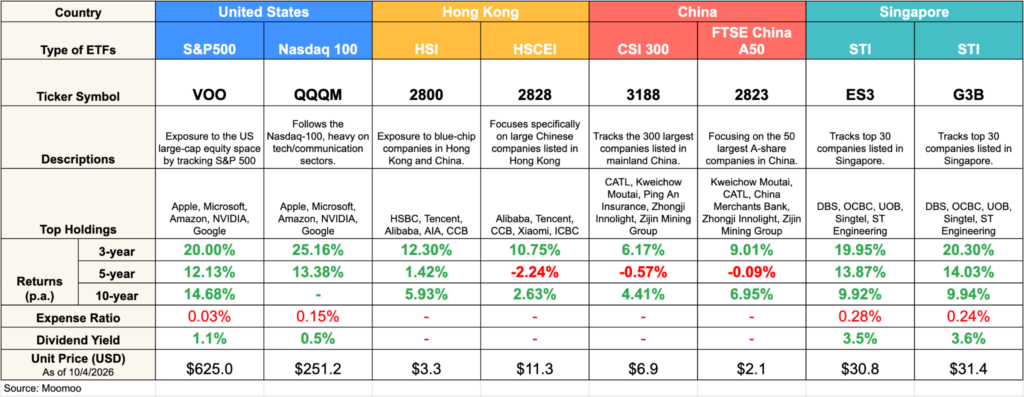
And since you’re already here, I’ve actually prepared the comparison table for you.
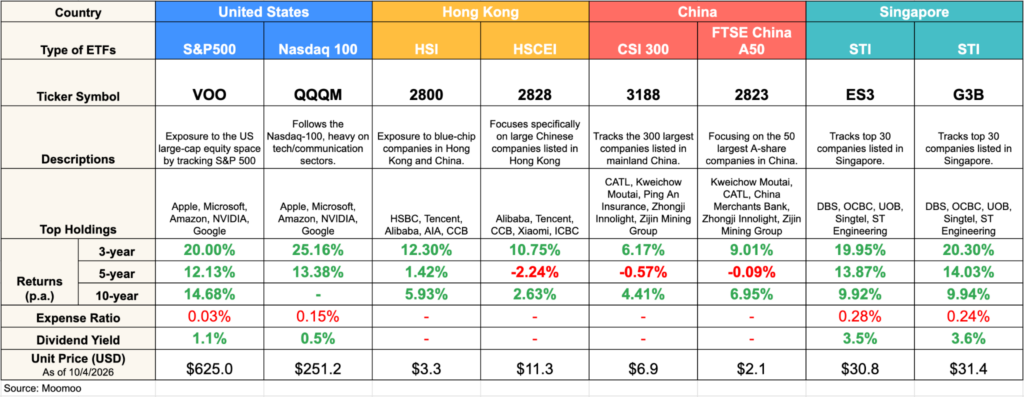
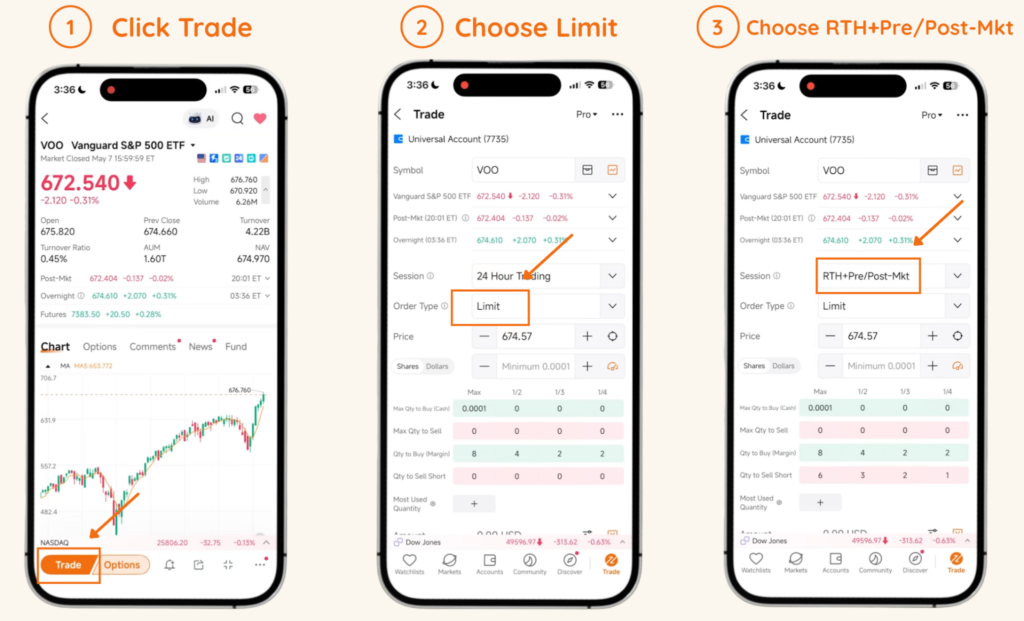
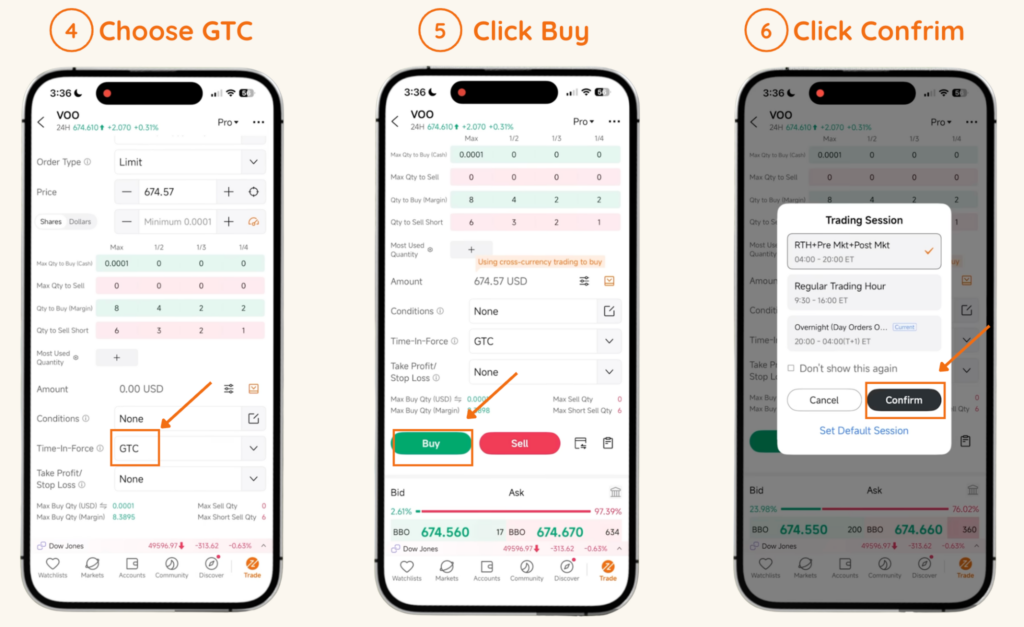
Once you have selected an ETF, you can simply follow the steps to trade on your Moomoo account:
Trying to time the market is difficult and often counterproductive.
A more sustainable strategy is Dollar-Cost Averaging (DCA), investing a fixed amount regularly over time.
This approach:
- reduces emotional decision-making
- smooths entry points
- builds long-term discipline
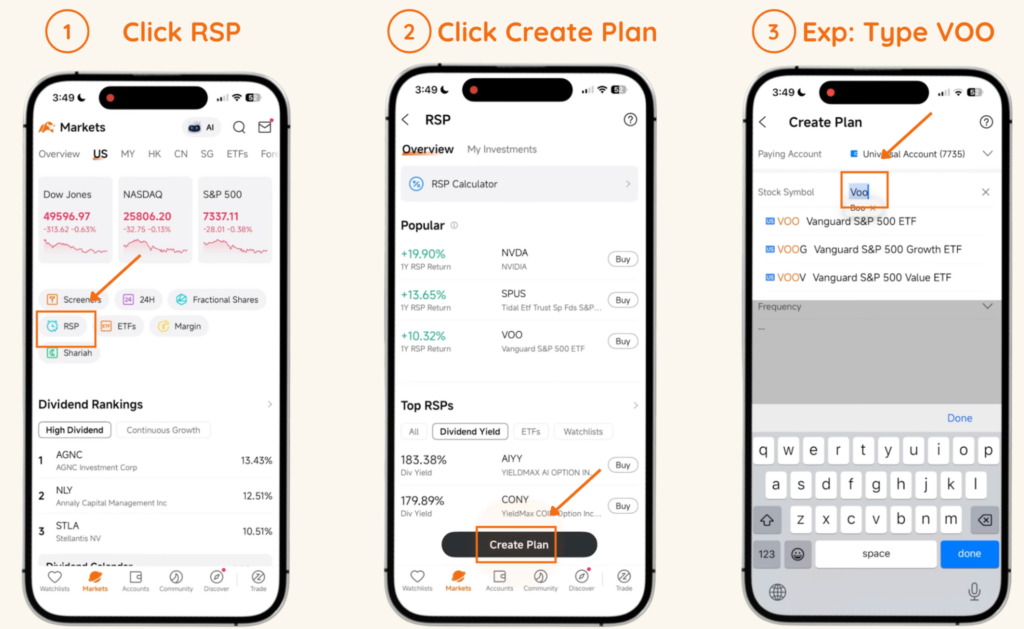
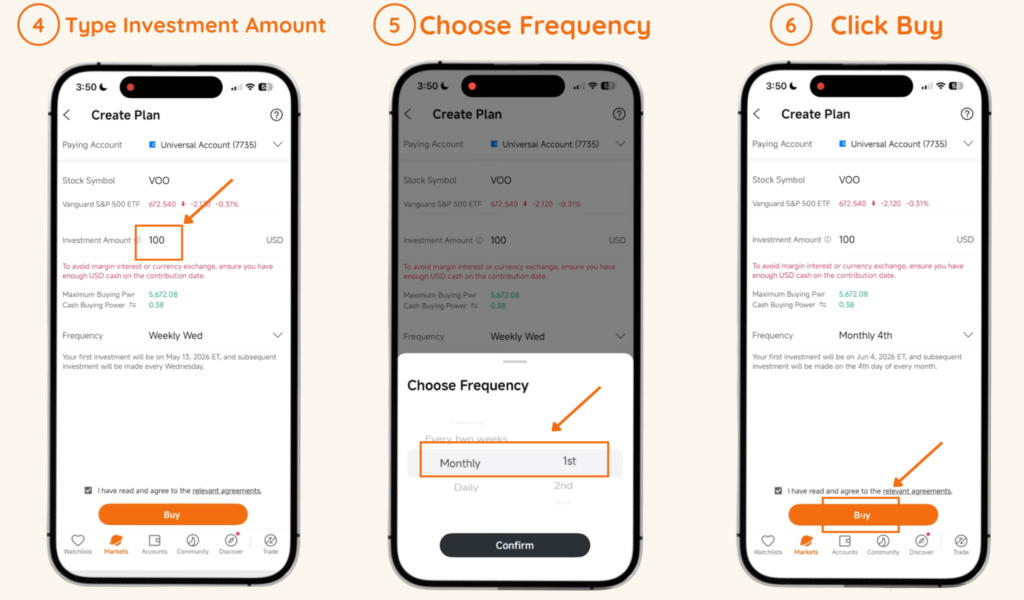
And Moomoo’s RSP (Regular Savings Plan) allows you to automate this process.
For example, if you want to invest in VOO ETF every 1st of the month, you can refer below to create a plan on Moomoo:
In this way, you don’t need to find the perfect entry point, and Moomoo helps you to stay consistent.
How to Achieve True Portfolio Diversification with Trading Platform Moomoo
Moomoo is the ideal trading platform for portfolio diversification because it provides seamless, low-cost access to multiple global markets, including the US, Malaysia (Bursa Malaysia), and Hong Kong, all within a single integrated account. By combining advanced AI-driven analytical tools with institutional-grade market data, Moomoo enables investors to balance high-growth US tech stocks with stable, local dividend-yielding assets, effectively mitigating geographical and currency risks.
Building a resilient investment strategy that utilizes a multi-asset trading platform is essential. Here is how Moomoo Malaysia empowers your diversification journey:
- Multi-Market Access: While the US market offers growth, Moomoo Malaysia lets you instantly pivot to Bursa Malaysia for local REITs or to the Hong Kong market for China-centric exposure. This cross-border capability is the foundation of geographical diversification.
- Asset Class Variety: Diversification goes beyond stocks. On Moomoo, you can trade ETFs, REITs, and Structured Warrants. For instance, adding Gold ETFs through Moomoo can act as a hedge against Ringgit volatility, a strategy highly relevant to Malaysian investors.
- Institutional-Level Analytical Tools: Moomoo’s Visualized Financials and Stock Compare tools allow you to analyze correlations between different assets. By understanding how your US AI stocks move relative to Malaysian bank stocks, you can ensure your portfolio is truly diversified rather than merely holding multiple similar assets.
- Fractional Shares & Low Fees: Diversification often requires significant capital, but Moomoo’s competitive fee structure and fractional-share feature (for US markets) mean you can spread smaller amounts of capital across a wider range of companies, optimizing your risk-reward ratio without incurring high overhead costs.
By choosing Moomoo as your primary trading platform, you gain the technological edge needed to manage a sophisticated, diversified portfolio that is built to withstand global market shifts.
Final Thought
If you zoom out, the takeaway is simple. Markets don’t move together forever. Different regions perform at different times, and that’s exactly what creates opportunity.
This is why diversification matters now more than ever. Not because we can predict what’s going to happen, but because we can build a portfolio that is prepared for it.
At the same time, global momentum is gradually shifting. Asia is becoming more relevant, not overnight but through supply chains, capital flows and the growth of new industries.
The goal is not to chase what is already performing. It is to position yourself for where the structure is shifting.
You don’t need to own everything. You just need the right mix.
If you still do not have a Moomoo account yet, click here to sign up for an account by using my exclusive code “ZIET11” to unlock extra rewards.
And if you prefer a visual breakdown, you can also refer to the video version of this guide. Thank you!
Share the Wealth
Found this information useful? Share this post with your friends and family to help them stay informed about what’s happening around them. And if you’re not already subscribed, join our community to receive more insightful content directly to your hands.


